


social media SEO strategy for organic search growth is a practical system marketers can run weekly to improve organic visibility in Google and Bing. This guide explains social media SEO strategy for organic search growth with clear steps, tables, and examples you can implement without thin AI fluff.
However, tools alone do not create rankings. Instead, social media SEO strategy for organic search growth works when strategy, content quality, technical access, and measurement stay aligned. Therefore, use this page as an operating checklist for social media teams.
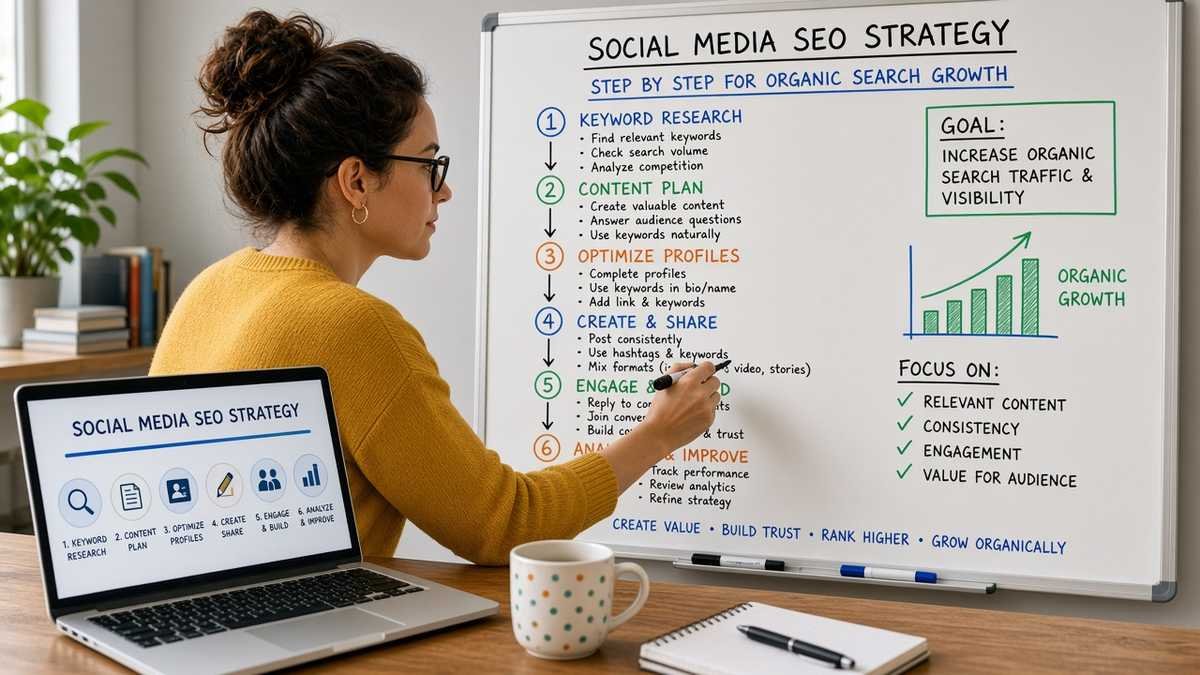
What social media SEO strategy for organic search growth means in practice
In short, social media SEO strategy for organic search growth turns scattered tactics into a repeatable workflow. First, define the outcome (qualified organic demand). Next, map the inputs (queries, assets, links, or campaigns). Then, ship improvements every sprint and measure impact.
Because search systems reward helpful originality, pair every recommendation with an example, a table, or a diagram. Likewise, keep claims tied to primary sources such as Google helpful content guidance.
| Stage | Owner | Output | Success signal |
|---|---|---|---|
| Discover | SEO / analyst | Priority opportunities | Query list with intent tags |
| Build | Editor / specialist | Asset or experiment | Published improvement |
| Prove | Growth lead | Dashboard delta | CTR, conversions, or links |
| Scale | Team | Playbook update | Repeatable checklist |
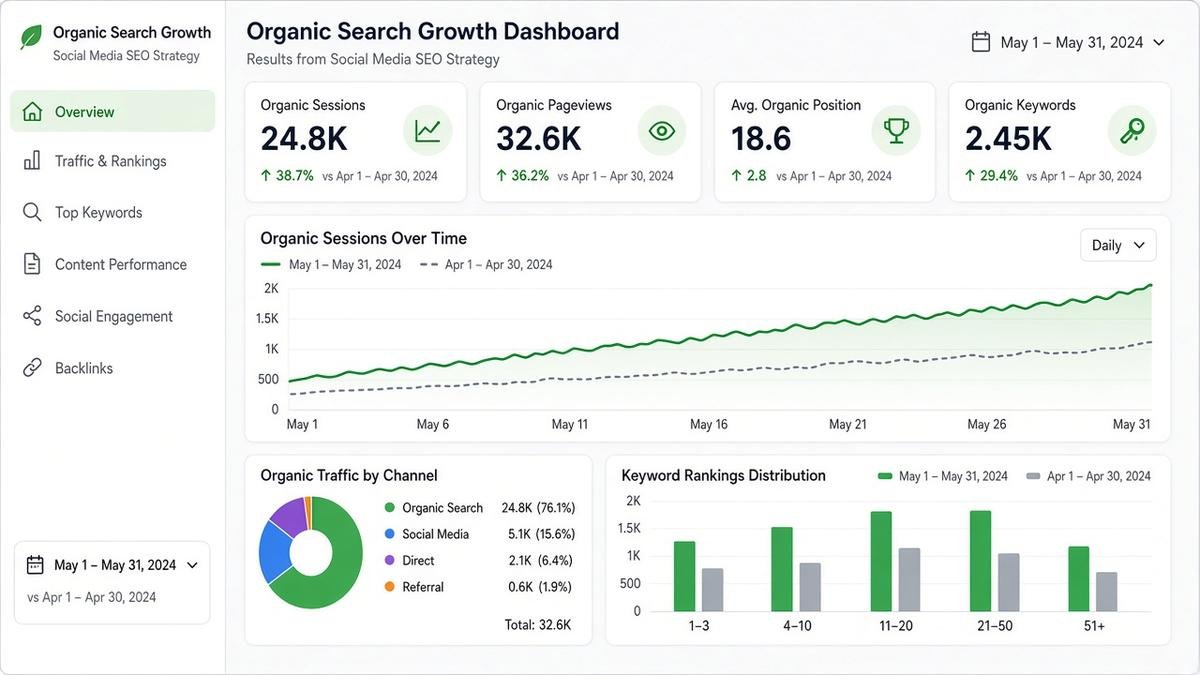
Illustrative impact after applying social media SEO strategy for organic se
Illustrative only: consistent execution of social media SEO strategy for organic search growth compounds faster than one-off bursts.
How to implement social media SEO strategy for organic search growth step by step
- Write a one-sentence goal that includes social media SEO strategy for organic search growth and a business metric.
- Audit current pages, campaigns, or entities related to the goal.
- Prioritize three actions you can ship in fourteen days.
- Add internal links to related IB guides such as Google AI search rankings guide.
- Validate technical access and indexation before judging rankings.
- Publish, then review Search Console and Bing data after 14–28 days.
Moreover, connect the work to adjacent topics via SEO & Digital Marketing so topical authority grows. Similarly, cite Bing Webmaster Guidelines when explaining crawl and quality expectations.

social media SEO strategy for organic search growth: common mistakes to avoid
- Publishing overlapping URLs that cannibalize the same long-tail keyword.
- Ignoring Bing while optimizing only for Google.
- Using identical image styles across every article.
- Skipping FAQ and schema blocks that help AEO/GEO visibility.
- Reporting traffic without conversion or assisted-value context.
Operational cadence for social media SEO strategy for organic search growth
Meanwhile, keep measurement honest. Track impressions, CTR, conversions, and assisted value in both Google Search Console and Bing Webmaster Tools. Therefore, your team can connect social media SEO strategy for organic search growth work to pipeline instead of vanity traffic.
Furthermore, document decisions in a shared changelog. For example, note which titles changed, which assets shipped, and which experiments failed. Consequently, future sprints move faster because the team avoids repeating dead ends.
Additionally, localize examples for US, UK, Canada, Australia, and EU readers when regulations, tools, or buyer language differ. In contrast, generic global copy often underperforms long-tail intent in each market.
Next, assign a single owner for social media SEO strategy for organic search growth so priorities do not drift across freelancers and agencies. Then, review blockers every Monday in a thirty-minute standup focused only on shipping.
Also, create a living brief library. Each brief should include audience, intent, primary long-tail keyword, supporting questions, required proof, and internal links. Without briefs, production speed rises while usefulness falls.
Besides process, invest in unique media. Alternate diagrams, comparison tables, annotated screenshots, and editorial photography so pages do not look mass-produced. Unique visuals support brand trust and social click-through.
Equally important, protect indexation. Confirm canonical tags, sitemap inclusion, and crawl access before judging rankings. Otherwise, teams rewrite copy for pages Google never reliably crawled.
Finally, treat social media SEO strategy for organic search growth as an operating system: brief, produce, enrich, ship, and learn every week. As a result, organic acquisition compounds while competitors chase one-off tips.
In practice, most teams under-invest in the learn stage. After publishing, annotate the dashboard, compare Google versus Bing movement, and decide whether to refresh, expand, or consolidate. That feedback loop is where social media SEO strategy for organic search growth becomes durable growth instead of content volume.
If resources are limited, run a fourteen-day pilot: one discovery day, three build days, one QA day, one publish day, and eight days of measurement notes. Then scale only the steps that changed leading indicators.
| Metric | Tool | Review cadence |
|---|---|---|
| Impressions / CTR | Google Search Console | Weekly |
| Bing discovery | Bing Webmaster Tools | Weekly |
| Conversions | Analytics / CRM | Weekly |
| Content freshness | Editorial calendar | Monthly |
FAQs about social media SEO strategy for organic search growth
What is social media SEO strategy for organic search growth?
Social media SEO strategy for organic search growth is a structured approach that helps marketing teams improve organic outcomes through prioritized, measurable actions.
How long before social media SEO strategy for organic search growth shows results?
Many teams see leading indicators in two to four weeks, while durable ranking gains often need one to three months of consistent shipping.
Does social media SEO strategy for organic search growth help AI search and classic SEO?
Yes. Clear answers, entities, evidence, and internal links support both traditional blue links and answer/generative surfaces.


Leave a Comment