

Add a new user in WordPress from Users, then Add User. Pick a safe role and avoid sharing one administrator login.
keep users on your wordpress site
Add a New User in WordPress as an Admin

- Updated:
- 4 minute read
- 0 Comments
To add a new user in WordPress, open your dashboard, go to Users, choose Add User, enter a unique username and email, set a strong password, pick a role, and click Add User. Give the Administrator role only to people who must control the whole site. This works the same on WordPress installs used in the United States, Canada, the UK, Australia, and Europe.
The steps below match the current Users screen on a self-hosted WordPress site. WordPress.com sites use a similar flow, with a few labels changed.
Add a new user in WordPress
Log in at yoursite.com/wp-admin. You need an account that can manage users. Editors cannot create administrators.
- In the left menu, click Users.
- Click Add User.
- Enter a username. You cannot change it later, so avoid “admin”.
- Enter an email address the person can open today.
- Set a long password, or use the one WordPress suggests.
- Choose a role. Subscriber is the safest default.
- Click Add User. WordPress can email the login link.
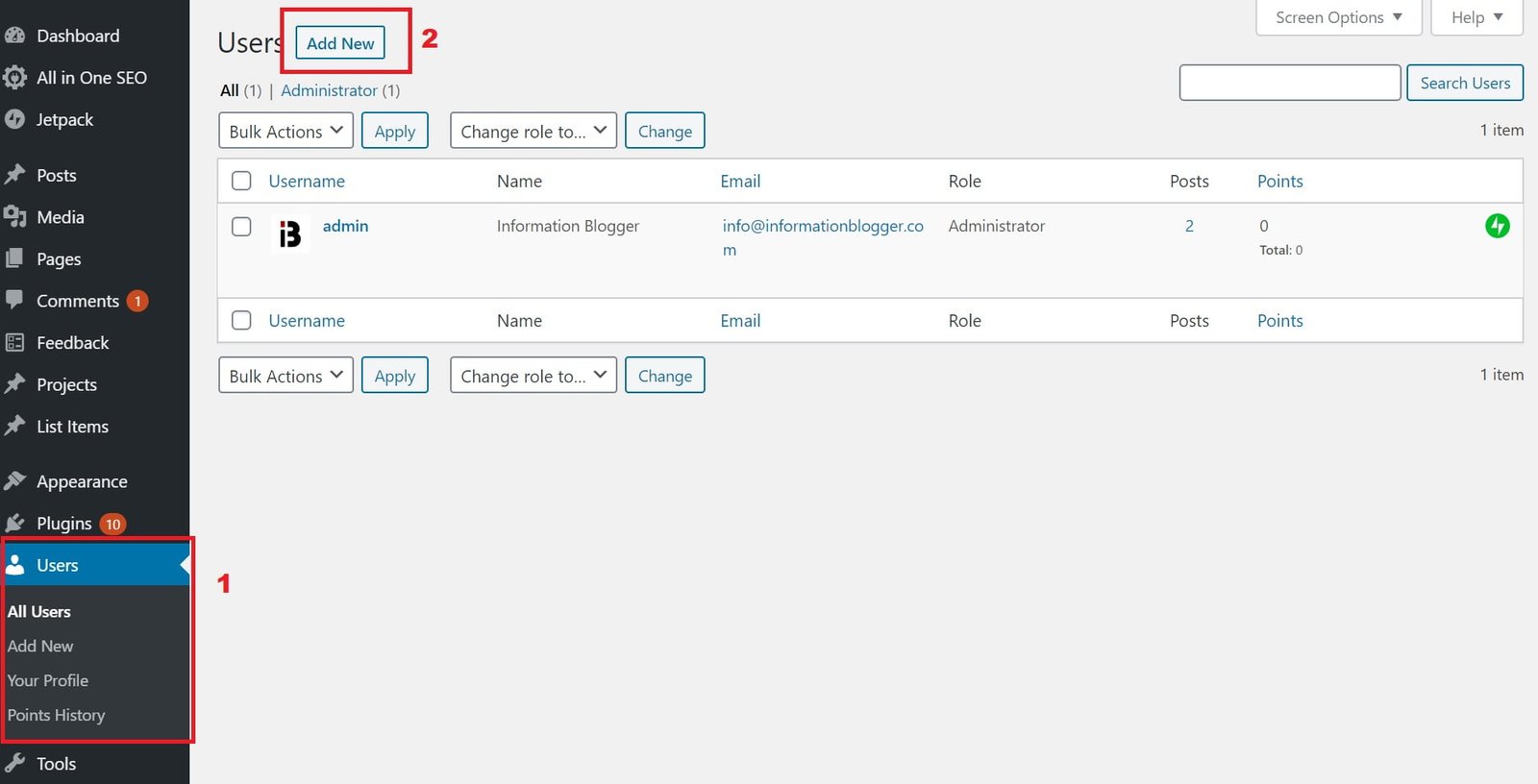
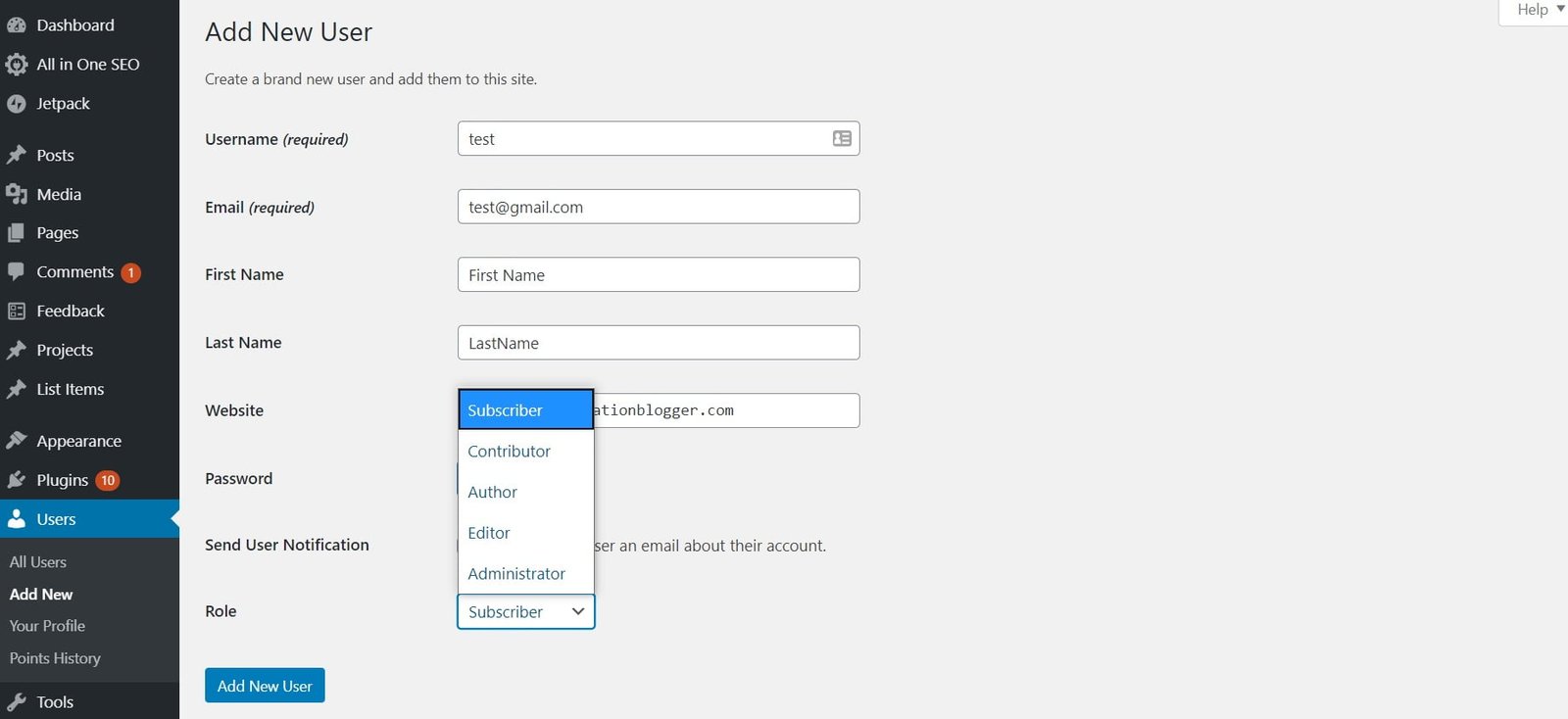
The official screen is documented on WordPress.org: Add New User. In addition, the roles and capabilities guide explains what each role can change.
Which WordPress role should you assign?
| Role | Can publish | Can change settings | Use it for |
|---|---|---|---|
| Administrator | All content | Yes, including plugins and users | Site owners only |
| Editor | Anyone’s posts and pages | No | Managing editors |
| Author | Their own posts | No | Regular writers |
| Contributor | No, drafts only | No | Guest writers |
| Subscriber | No | No | Readers with an account |
However, a contractor who only writes posts does not need Administrator. An Author or Contributor account limits the damage if that password leaks. Therefore, create a second admin only when the owner is unavailable, and remove it when the job ends.
Watch: users, roles, and the WordPress dashboard
This walkthrough shows login, the Users menu, Add User, and what each role is allowed to do.
Security checks after you add a new user in WordPress
Also turn on two-factor login for every Administrator. A password alone is easy to phish. For example, a writer in Berlin and an owner in Austin should both confirm sign-in with an app, not only an email code that an attacker can reset.
- Never share one admin login among a team
- Delete users who leave the company, and attribute their posts to an active author
- Use a different email for each person so password resets stay private
- Review Users once a month for accounts you do not recognize
If you are comparing platforms before you hire writers, see Squarespace vs WordPress. For the wider security picture, see why firewall security matters.
After the account exists
Ask the new person to log in once and change the password before they publish anything. Check that their role matches the job. An author in Canada does not need plugin access. An editor in the UK does not need to be an administrator. Remove the account the week they leave, and assign their posts to someone who is still on the team so the byline does not point at a dead email.
Also turn on two-factor login for every administrator, whether they work in the US, Europe, or Australia. A password reused from another site is the usual way these accounts are taken over. The Add User screen is the easy part. The review each month is what keeps the site yours.
Common mistakes when adding users
The usual mistake is making everyone an administrator because it is faster. It is faster until a plugin install or a deleted page takes the site down. The second mistake is using one email address for every login, so a password reset goes to the wrong person. The third is never looking at the Users screen again. A site that started with two people in 2020 can quietly collect freelancers who still have editor access.
Fix those three before you add the next account. Give the new user a role that matches the work, a mailbox they actually open, and a date when you will review the list. Teams in the US, the UK, Canada, Australia, and Europe all lose sites the same way: a shared admin password written in a chat thread. Separate users are the repair.
If the person only needs to write, stop at Author or Contributor. You can raise the role later in one click. You cannot unsend the week they had full control of plugins and themes.
What to tell the new user
Send them the login address, which is your domain followed by /wp-admin, and ask them to choose their own password on first login. Tell them which role they have and what they must not touch. An author should hear that pages, plugins, and other people’s posts are out of bounds. An editor should hear that settings and users are out of bounds.
Also ask them to confirm the email WordPress sends. If it never arrives, the host is not sending mail, and you should share the temporary password through a private message instead of posting it in a group chat. That is the whole handoff. It takes ten minutes and it is the difference between a tidy team and a shared login written on a sticky note.
Questions about adding a WordPress user
Can I add a new user in WordPress without giving them admin rights?
Yes. Choose Author, Editor, Contributor, or Subscriber on the Add User screen. Administrator is optional, not the default you should use.
Why did the new user not get the email?
Check the spam folder first. Also confirm your host is sending mail. You can still share the login URL and a temporary password through a secure channel, then ask them to change it.
Can I change a username later?
WordPress does not let you edit the username on the profile screen. Create a new user and remove the old one if the name must change.
Does this work on WordPress 6 and later?
Yes. Users, Add User, and the five default roles are still the standard path on current WordPress releases used by hosts in the US, UK, Canada, Australia, and the EU.





Leave a Comment